
我爱记歌词
Exclusive: ‘Shaomai cartoon’ satirizes US’ abuse of concept of national security targeting Chinese tech firms, ambassador tells GT_我的网站

一 |

After the US Embassy in Panama posted claims by US officials on social media smearing Chinese technology companies, the Chinese Embassy in Panama on Monday posted an image on its official X account showing a crying shaomai dumpling character with a listening device inserted into it in response. The post was captioned, "For those whose minds are filled only with geopolitical calculations, they might even suspect that there is a listening device in a shaomai dumpling."
The Chinese response quickly drew attention from mainstream Panamanian media, with a report by La Estrella de Panama noting that tensions between China and the US over the presence of Chinese technology in Latin America had reached the social media platform of the Chinese Embassy in Panama, which "responded with a message that quickly drew attention for its unusual reference to Chinese food."
Chinese Ambassador to Panama Zhang Xiangyan explained the cartoon in an interview with the Global Times, stating that "nothing is more representative of Panama's local characteristics than a Chinese-style breakfast." Shaomai, a popular Chinese delicacy widely known and loved by Panamanians, carries elements of Chinese culture. Using it as the theme of a cartoon makes the satire easier for local audiences to understand, Zhang said.
Recently, the US Department of Homeland Security announced that more than 40 Chinese entities would be added to a so-called entity list under the Uygur Forced Labor Prevention Act. Among those included were well-known Chinese food brands such as Qiaqia sunflower seeds and Synear dumplings. The Chinese Embassy in Panama hoped to use cartoons to satirize what it described as the US's abuse of the concept of national security, the ambassador added.
Zhang said that "it should be emphasized that before releasing the satirical cartoon, we had already clarified the facts and lodged a firm protest against the US' inappropriate actions through social media, making our position clear." He added that the cartoon was a follow-up response based on a series of rational rebuttals, using a more accessible and impactful artistic form to expose the absurdity of the US' smears against China.
On August 22, the Chinese Embassy in Panama responded to US accusations targeting Chinese technology companies. The embassy said in a statement released on its official WeChat account on Monday that it had noted that the US Embassy in Panama had reposted on social media remarks by certain US officials making unfounded accusations against Chinese technology companies.
"Fabricating facts and distorting right and wrong are habitual tactics of some US politicians," the Chinese embassy said, stressing that US claims that Chinese companies conduct espionage activities for the Communist Party of China lack basic factual grounds.
The embassy also accused the US of "a thief crying 'stop thief'" and "shifting the blame," saying Washington has overstretched the concept of national security, restricted the normal development of Chinese companies and pressured regional countries to replace Chinese products.
"This is blatant technological bullying," the embassy said. The US, which is truly keen on conducting espionage activities around the world and does not even spare its allies, should not accuse others of the same, the embassy said.
"For those whose minds are filled only with geopolitical calculations, they might even suspect that there is a listening device in a shaomai dumpling," the embassy said, using a sarcastic remark to mock what it described as Washington's excessive suspicion of Chinese technology.
。
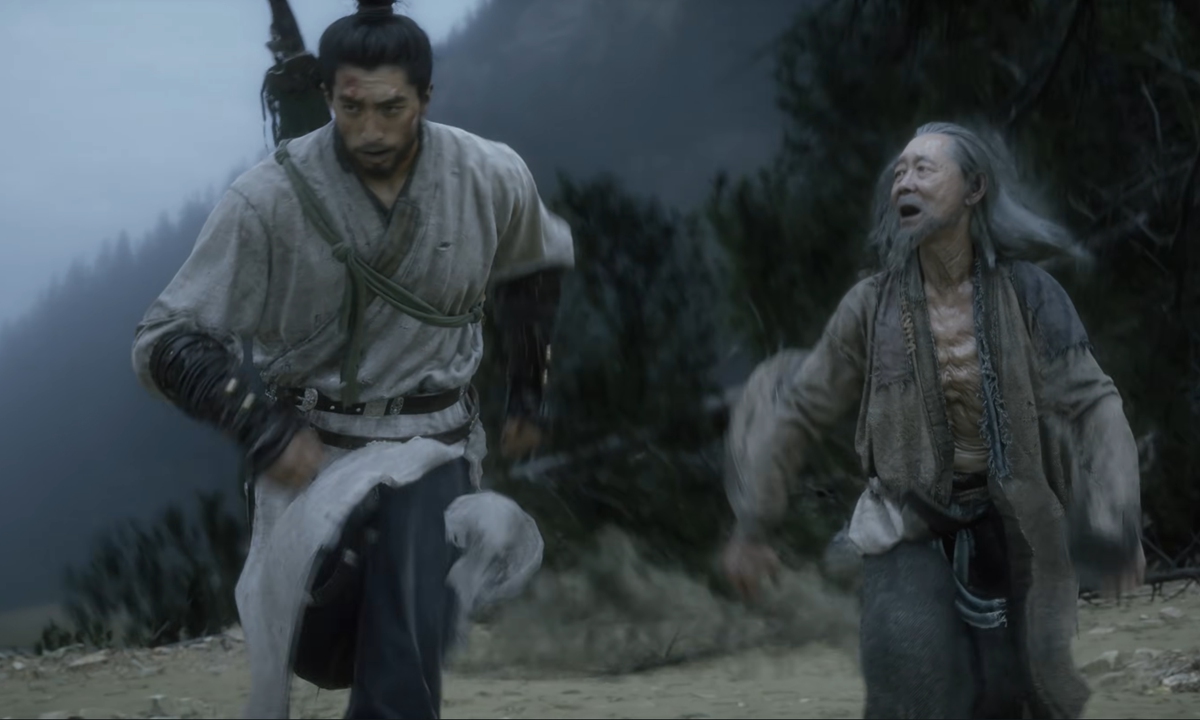
The new title is a single-player action role-playing game inspired by Zhong Kui, a legendary figure in Chinese folklore known as a vanquisher of ghosts and demons.
The latest footage, which includes a first look at Zhong Kui in combat against demons, has already drawn attention from players for its highly polished visuals, with some overseas fans describing the presentation as having a movie-like quality.
"It looks like a Netflix movie. Can't wait to play it," reads a comment on the X post of Game Science account.
"It's like I'm watching a real movie, unreal the graphics and far better than Wukong in terms of graphics ... I'm gonna buy this on day one," another post reads.
The trailer marks a significant step forward from the game's initial reveal last year, when Game Science released only a cinematic teaser as the project was still in its early development stage. But the Hangzhou-based company has not announced a release date or window for the game.
Game Science first unveiled Black Myth: Zhong Kui at Gamescom Opening Night Live in August 2025. The studio subsequently released a six-minute in-engine video on February 10, 2026, as a Chinese New Year special. Game Science described the video as non-canon content rather than part of the game's actual story.
Domestically, some players have also focused on the progress Game Science appears to have made since Black Myth: Wukong.
One fan wrote on Chinese video site Bilibili that it is clear to see the improvements in "scenes, animation, optimization and materials" after the company's successful run of Wukong.
More notably, the player said she felt the new game was moving beyond Wukong's predominantly dark aesthetic, with elements such as cooking, fishing and playing music giving it "more of a sense of everyday life and a human touch."
In parallel to the trailer release, Game Science founder Feng Ji has also outlined a set of principles guiding the studio's game development on Thursday, emphasizing that developers should first make games that genuinely move themselves.
He also stresses constantly exploring new forms of visual expression, studying leading games while ultimately establishing the studio's own standards, and putting ideas into practice so they can be tested and refined against reality.
The choice of Zhong Kui represents a departure from the first Black Myth title, Black Myth: Wukong, which was based on the classic Chinese classic novel Journey to the West.
Game Science has said it wanted to use the new project to explore different gaming experiences, bolder features and fresh approaches to world-building and narrative design rather than immediately making another story centered on the Monkey King.
In the folklore surrounding Zhong Kui, the character is portrayed as a fearsome ghost catcher and protector against evil spirits. There are no official historical records establishing him as a historical person but his legend developed through stories, paintings, novels and folk traditions over the centuries in China.
According to the best-known version of the legend, Zhong Kui was a scholar who performed exceptionally well in the imperial examinations but was rejected by the emperor because of his appearance.
He died in anger and was later appointed a supernatural official responsible for driving away ghosts and demons. His image subsequently became associated with protection from evil and was traditionally displayed in homes as a talisman.
。
Current article:http://menfangongbeifei.sbs/dae/20260826/6907877.html
Published on:10:02:11